
304 vs 316 Stainless Steel: Which Washer Grade?
A practical guide to specifying the right grade. Both are austenitic stainless steels we stamp every day — the difference is what the joint has to survive. Here is how to choose with confidence.
304 and 316 are the two stainless grades behind the great majority of washers in service. They look identical, share the same austenitic structure, and both rely on a passive chromium-oxide film for their corrosion resistance. The decisive difference is one element: 316 adds molybdenum, and that molybdenum is what lets the joint stand up to chlorides — salt spray, coastal air, de-icing salt and many process media.
For dry, indoor or general structural fastening, 304 is the cost-effective workhorse and there is rarely a reason to pay more. For marine, coastal, chemical and high-chloride environments, 316 (or the low-carbon 316L) earns its premium by resisting the localised pitting that eventually attacks 304. The sections below set the two grades side by side so you can specify the right one — and the right standard class — the first time.
304 and 316 side by side.
Typical alloying ranges and corrosion behaviour. The molybdenum row is the one that matters most when chlorides are in play.
| Property | 304 | 316 | 316L |
|---|---|---|---|
| Chromium (Cr) | 18–20% | 16–18% | 16–18% |
| Nickel (Ni) | 8–10.5% | 10–14% | 10–14% |
| Molybdenum (Mo) | — | 2–3% | 2–3% |
| Carbon (C) max | ≤0.08% | ≤0.08% | ≤0.03% |
| Chloride / pitting resistance (PREN) | ~18–20 | ~24–28 | ~24–28 |
| ISO 3506 class | A2 | A4 | A4 |
| Weld sensitisation risk | Low | Moderate | Very low |
| Relative cost | Baseline | Higher | Higher |
| Typical use | Indoor / general / structural | Marine / chemical / coastal | Welded marine / pharma / chemical plant |
Reading the table
- Molybdenum is the differentiator. 316's 2–3% Mo is what raises its pitting resistance against chlorides; 304 has none.
- PREN ranks pitting resistance. The Pitting Resistance Equivalent Number weights Cr, Mo and N — 316's ~24–28 beats 304's ~18–20.
- A2 = 304-group, A4 = 316-group. ISO 3506 corrosion classes let you call out the grade family on a drawing.
- "L" grades resist sensitisation. Low carbon (≤0.03%) avoids chromium-carbide precipitation when the part is welded.
When to choose 304 — and when to choose 316.
Match the grade to the environment, not the catalogue. Below are the situations each grade is built for.
When to choose 304
The cost-effective default where chloride exposure is low and the environment is dry or controlled. It delivers excellent general corrosion resistance and a clean, hygienic surface.
- Indoor structural and machinery fastening
- Food-contact and hygiene equipment away from salt
- General assembly, brackets and enclosures
- Inland or low-salt outdoor use, façades and cladding
When to choose 316
The grade buyers pay a premium for when chlorides, acids or salt spray are present. The added molybdenum sharply improves pitting and crevice corrosion resistance.
- Marine, offshore and coastal hardware
- Chemical and petrochemical process equipment
- De-icing salt, pool chemistry and wash-down chlorides
- Coastal solar, desalination and water treatment
For welded fabrications, specify 304L or 316L.
When a stainless part is welded or held in the sensitisation range, chromium can combine with carbon at the grain boundaries, locally depleting the chromium that provides corrosion resistance. The low-carbon "L" grades (≤0.03% C) suppress this carbide precipitation, so the corrosion resistance survives the heat.
- 304L — welded structural and general fabrications
- 316L — welded marine, chemical and high-chloride parts
If your washer is part of a welded assembly, tell us — we will quote the L grade so the finished joint keeps its corrosion performance.
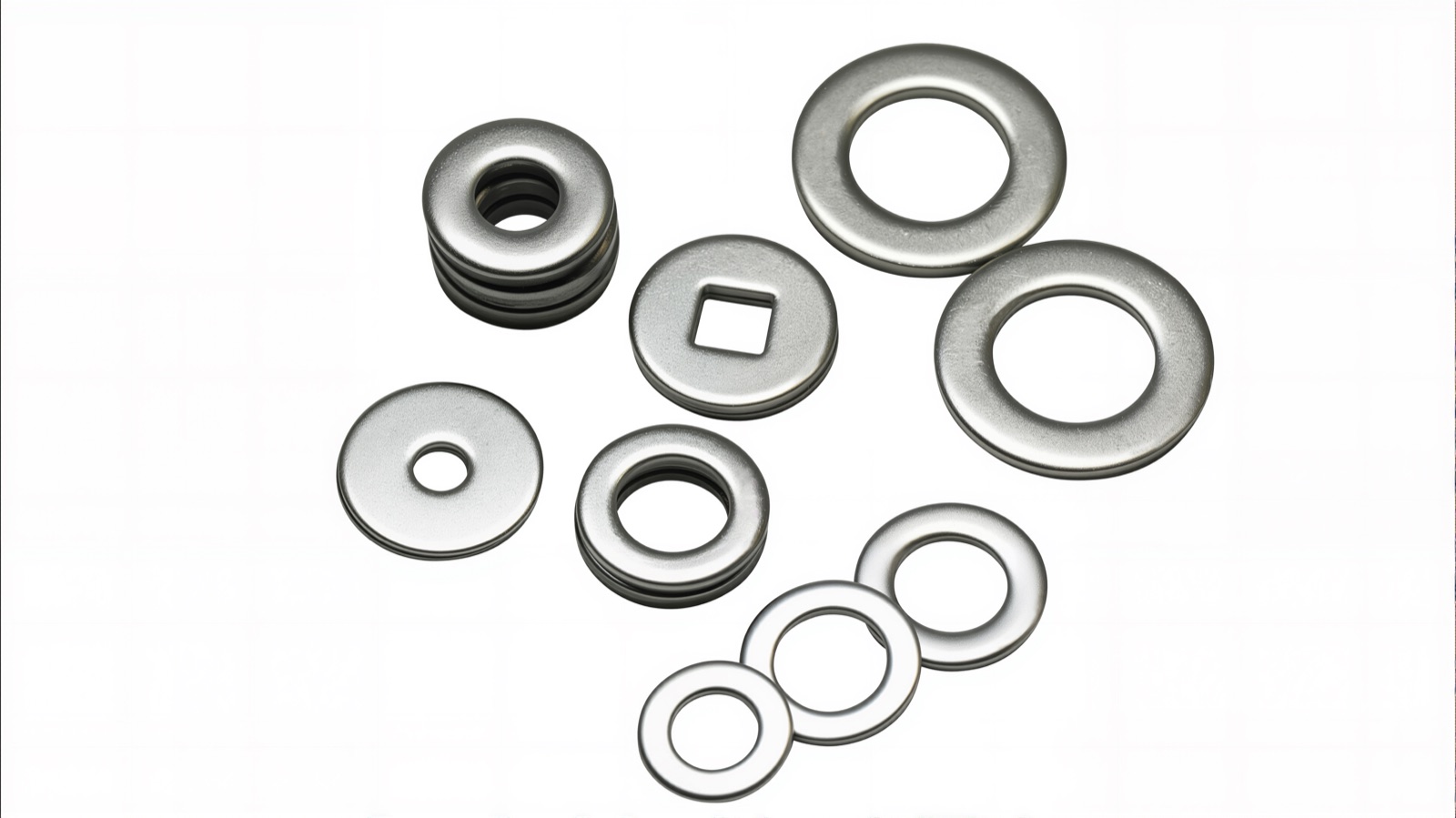
Where chlorides are present, default to 316.
Chloride ions are what break down stainless steel's passive film and start pitting. The more chloride and the warmer and wetter the service, the more the molybdenum in 316 pays off.
Salt spray & immersion
Marine and offshore hardware faces constant chloride attack. 316 / 316L resists the pitting that limits 304 in these settings.
Chemical media
Acidic and chloride-bearing process streams call for the higher PREN of 316; for welded plant, specify 316L.
Coastal & outdoor
Coastal solar, façades and de-icing-salt exposure last far longer in 316; reserve 304 for low-salt locations.
Send us your environment — indoor or outdoor, salt or chloride exposure, temperature, welded or not — and we will recommend 304, 316 or 316L and quote it to the standard you need. Ask us at [email protected] or via the form below.
304 vs 316, answered.
Is 316 worth the extra cost over 304?
It depends on the environment. In dry, indoor or general structural service, 304 performs well and 316 adds cost without a meaningful benefit. Where chlorides are present — marine, coastal, de-icing salt, swimming pools or many chemical media — the molybdenum in 316 sharply improves pitting and crevice corrosion resistance (PREN ~24–28 versus ~18–20 for 304). In those settings the premium is usually justified by far longer service life.
Can 304 stainless washers be used outdoors?
Yes, 304 is suitable for many outdoor applications away from significant chloride exposure — general construction, façades and equipment in inland or low-salt environments. Near the coast, in marine spray, or where road salt or pool chemistry is present, 316 or 316L is the safer specification because chlorides drive the pitting that 304 resists less well.
What do A2 and A4 mean for stainless washers?
A2 and A4 are corrosion-resistance groups defined in ISO 3506 for stainless steel fasteners. A2 corresponds to the 304 austenitic group; A4 corresponds to the 316 molybdenum-bearing group with superior chloride resistance. Specifying A2 or A4 communicates the corrosion class independently of the exact alloy.
What is the difference between 316 and 316L?
316L is the low-carbon version of 316, with carbon held to about 0.03% versus up to 0.08% for standard 316. The lower carbon resists sensitisation — chromium-carbide precipitation that can occur during welding and reduce corrosion resistance at grain boundaries. For welded parts or fabrications that see heat, the L grade is preferred; the alloying and general corrosion behaviour are otherwise very similar.
What is the practical difference between 304 and 316 stainless washers for a buyer?
Both grades look identical and come off the same coil-fed stamping line — the difference is service life in aggressive environments. 304 (A2) suits the majority of indoor, structural and general-assembly applications at a lower cost. 316 (A4) carries 2–3% molybdenum, which raises its pitting-resistance index (PREN ~24–28 vs ~18–20) and is the right choice when the joint will see chlorides, salt spray, pool water, acid wash-down or coastal outdoor exposure. Specifying the wrong grade in a corrosive service means premature failure; specifying 316 for a dry indoor joint is just unnecessary cost. We supply both from genuine, full-spec documented coil with mill test certificates on request.
Which grade is standard for food processing or pharmaceutical equipment?
Both 304 and 316 are used in food and pharma, but for different sub-environments. 304 (A2) is common in dry food-contact applications away from salt or chlorinated cleaning agents. 316 or 316L (A4) is the default where chlorinated CIP (clean-in-place) wash-downs, salt brines or acidic process media are present — the molybdenum content resists the pitting and crevice attack that cleaning chemicals can initiate on 304. For welded assemblies in pharma or food plant, 316L is preferred to avoid sensitisation at weld heat-affected zones. We stock both grades and can supply material traceability (MTC / EN 10204 3.1) suitable for regulated-industry audits.
Tell us what you need.
Send specs or a drawing and we will come back with pricing, lead time and material options. No account, no minimum to ask.
- ✓ 304 / 316 / 316L, DIN & ASME or custom
- ✓ Replies from engineers, typically within one business day
- ✓ Samples and material certificates available