
Stainless Steel Tooth Lock Washers
Serrated teeth bite into the joint for anti-rotation and reliable electrical bonding — internal (DIN 6798A) and external (DIN 6798J / DIN 6798A) styles, stamped in 304 and 316 / 316L stainless.
Mechanical anti-rotation and electrical bonding in one part.
Tooth lock washers — also called serrated, star or shakeproof washers — carry a ring of twisted teeth around the inner or outer edge. As the fastener is torqued, those teeth dig into both the bearing surface and the underside of the bolt head or nut. The result is two jobs at once: a spring bite that resists self-loosening under vibration, and a set of clean penetration points that establish metal-to-metal electrical contact.
Compared with split-ring spring washers, tooth washers spread their grip over many small contact points rather than one cut end, which makes them well suited to thinner sheet, softer materials and electrical bonding duty. Stainless 304 and 316 keep both the spring action and the bond intact in environments where plated carbon steel would corrode.
- Internal, external and countersunk tooth geometries
- Anti-rotation under vibration and dynamic load
- Teeth cut through paint, anodize and oxide for bonding
- 304 / 316 / 316L stainless — bright or polished finish
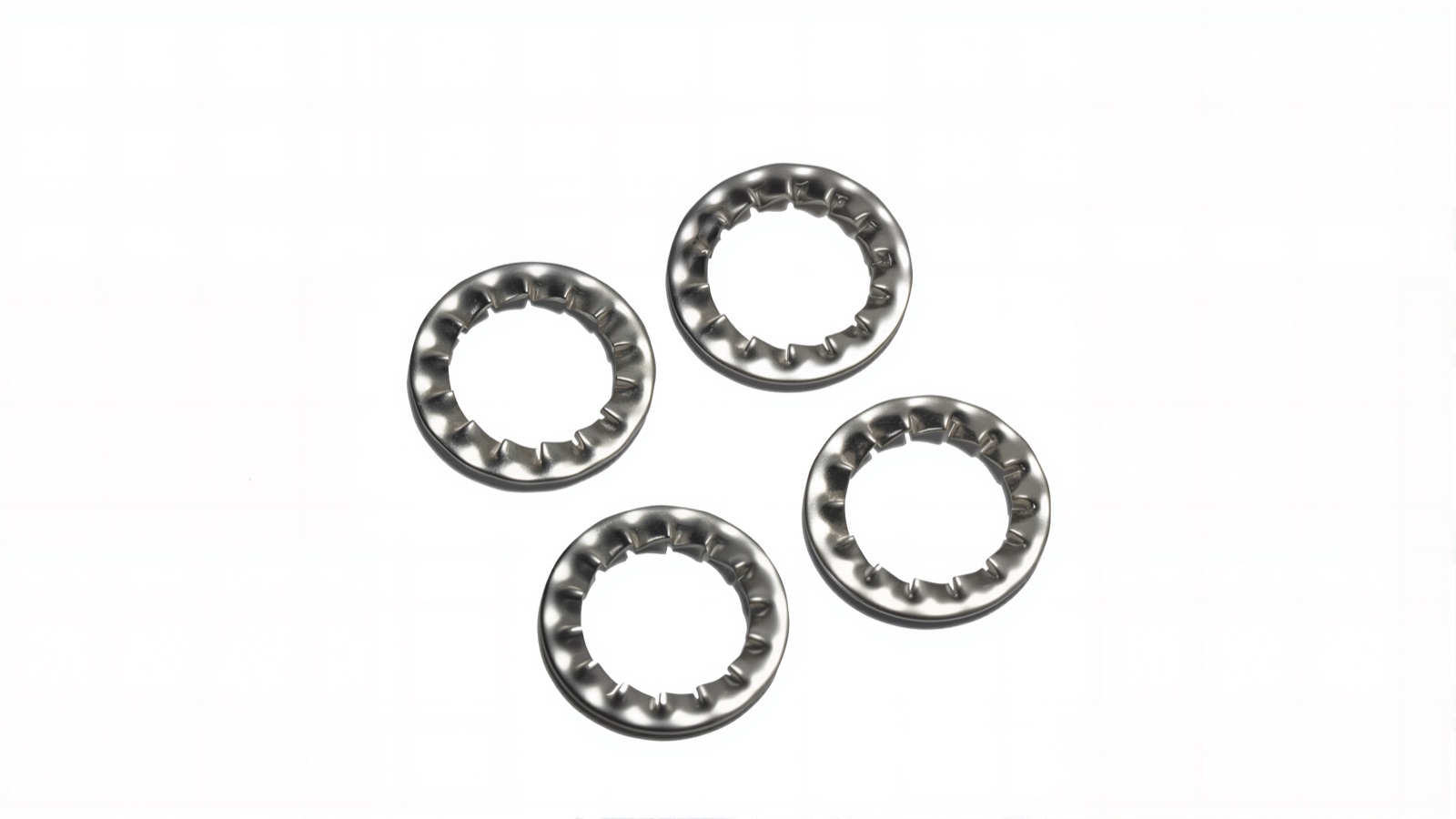
Internal, external or countersunk — when to specify each.
The tooth position changes both the holding behaviour and the contact pattern. Match the style to the head type, the hole and whether the joint needs an electrical bond.
Internal tooth
Teeth point inward and sit hidden beneath the bolt head or nut, giving a tidy outer edge. The default for a clean appearance, for slotted or oversized holes, and where the bearing face must stay unmarked outside the bolt circle.
- Concealed teeth, clean OD
- Good for slotted / oversized holes
- Moderate torque, general assembly
External tooth
Teeth ring the outer edge for the largest bite radius and the strongest hold — the choice for higher torque and where maximum anti-rotation matters. The wide contact ring also makes external-tooth the preferred style for electrical bonding and grounding.
- Largest bite radius, strongest hold
- Higher torque and vibration
- Best for bonding / grounding
Countersunk tooth
A coned, internal-tooth profile shaped to seat in the chamfer under flat-head and countersunk (oval / 82° / 90°) screws. It keeps the locking bite where the head must finish flush with the surface.
- For flat-head / countersunk screws
- Coned to match the head angle
- Locking bite with a flush finish
Teeth that cut through coatings to ground the joint.
Most structural metals carry a non-conductive skin — anodizing on aluminium PV frames, paint on enclosures, mill oxide on steel. A serrated tooth washer scores through that layer at every tooth, biting into the bare metal beneath and forming a low-resistance metal-to-metal bond as the bolt is tightened. That is why external-tooth stainless washers are a standard part of the electrical-bonding toolkit.
- Solar PV frames — bonding module frames and rails to the equipment-grounding path; 316 for coastal and rooftop exposure.
- Electrical enclosures & cabinets — earthing door panels, gland plates and chassis through painted surfaces.
- Earthing & grounding terminals — clean, repeatable contact under lugs and busbar connections.
A corroded washer is a degraded bond. Outdoor and coastal grounding should use 316 / A4 so the contact survives the design life. Confirm any UL / listing or local electrical-code requirements with the relevant authority for your project.
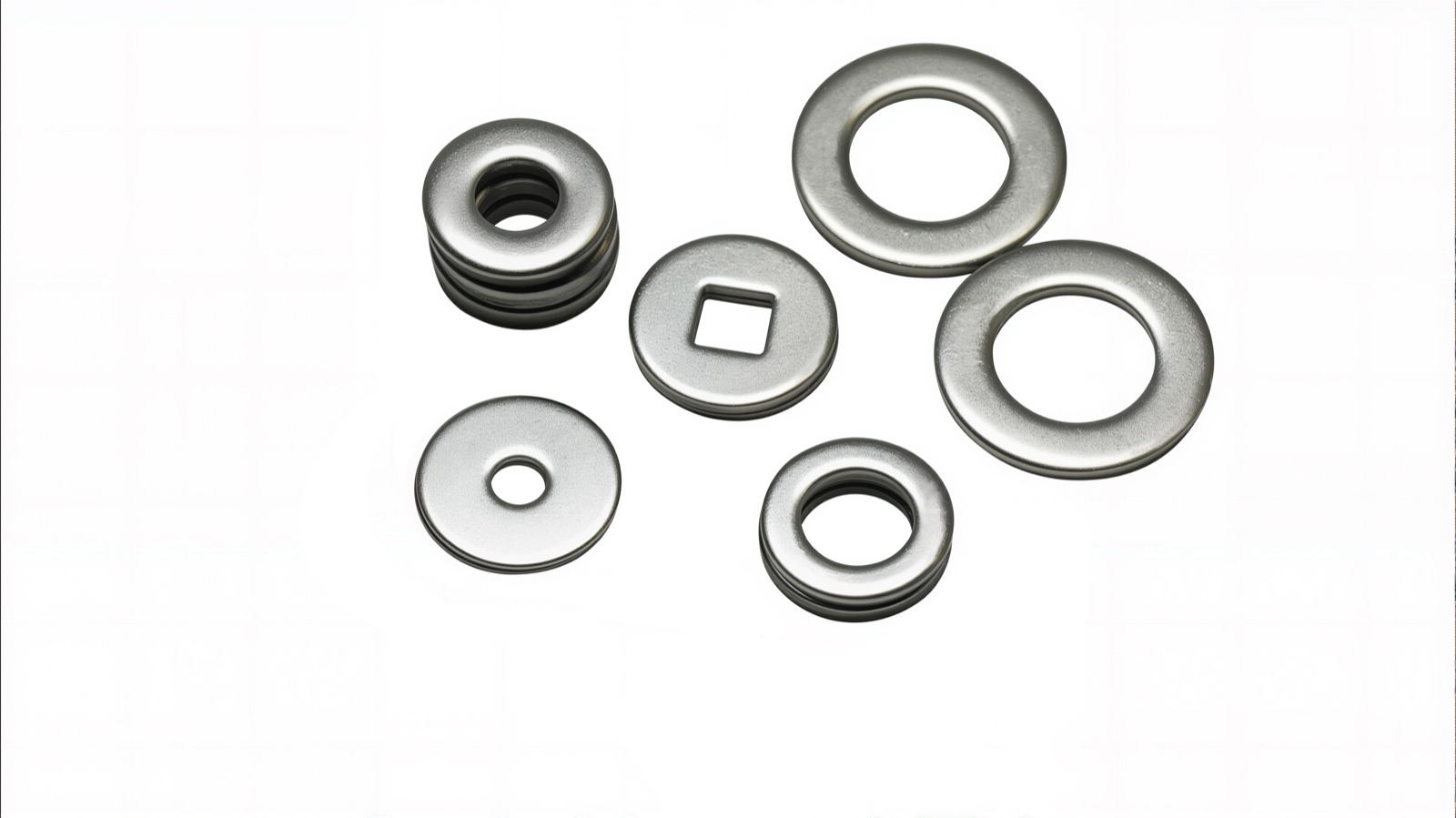
Representative metric range, M3–M20.
Tooth lock washers are sized by nominal thread, with an inside diameter slightly larger than the bolt shank so teeth clear the thread. Inside diameter is per DIN 6798; the full range is available on request.
| Nominal thread | Inside dia. (mm) | Style |
|---|---|---|
| M3 | 3.1 | Internal · external |
| M4 | 4.1 | Internal · external |
| M5 | 5.1 | Internal · external |
| M6 | 6.1 | Internal · external |
| M8 | 8.1 | Internal · external |
| M10 | 10.1 | Internal · external |
| M12 | 12.1 | Internal · external |
| M16 | 16.1 | Internal · external |
| M20 | 20.1 | Internal · external |
Need imperial (#4–3/4") or countersunk-tooth sizes? Send the thread size and head type and we will confirm the matching washer. Outer diameter and thickness vary by style and standard, so we quote those against your specification rather than publish a fixed table.
304 for general duty, 316 where the bond must last.
Stainless keeps both the spring bite and the electrical contact intact in environments that would corrode plated carbon steel. We match grade and finish to the application.
304 — the workhorse
Excellent general corrosion resistance at a cost-effective price. The default for indoor assembly, machinery, structural fastening and dry electrical cabinets where chloride exposure is low.
316 — for the harsh stuff
Added molybdenum for chloride, salt-spray and acid resistance. Specify it for outdoor PV-frame grounding, marine, coastal and chemical duty where the bond must survive the design life.
Standard finish
Bright as standard — a clean, corrosion-resistant surface that leaves the teeth sharp for biting.
On request
Polished finish available where a smoother, brighter appearance is required.
Traceable material
304 / 316 / 316L from documented melts. Mill test certificates (MTC / EN 10204 3.1) available on request.
Tooth lock washer questions.
What is the difference between internal and external tooth washers?
Internal-tooth washers (DIN 6798A) carry teeth on the inside edge, hidden under the bolt head or nut for a cleaner look and good behaviour on slotted or oversized holes. External-tooth washers (DIN 6798J / 6798A) put the teeth on the outer edge for a larger bite radius, stronger hold at higher torque and a wider contact ring — which is why external-tooth is preferred for electrical bonding. Countersunk-tooth styles are coned to seat under flat-head and countersunk screws.
Can tooth lock washers be used as grounding or bonding washers?
Yes. The sharp serrations cut through paint, anodizing, oxide and coatings to make direct metal-to-metal contact, establishing a low-resistance electrical bond. External-tooth stainless washers are widely specified for solar PV module-frame grounding, equipment enclosures and earthing terminals. Confirm any listing / UL or local electrical-code requirements with the relevant authority for your project.
Should I choose stainless or carbon-steel tooth lock washers?
Stainless 304 (A2) and 316 (A4) resist corrosion and keep both the teeth and the electrical bond intact outdoors and in wet or chemical environments, where zinc-plated carbon steel can rust and lose contact. Carbon steel offers higher spring hardness and lower cost for dry indoor use. For outdoor PV frames, marine and coastal duty specify 316; for general indoor and structural assembly, 304 is the cost-effective default.
Which grades and sizes of tooth lock washers do you stock and produce?
We produce tooth lock washers in AISI 304 (A2), 316 (A4) and 316L stainless steel, metric M2–M64 and imperial sizes, bright or polished finish. Production runs off high-speed coil-fed JH21-series stamping presses fed straight from 304/316 stainless coil — which keeps tolerances consistent across large batches. Quote your size and quantity and we will confirm availability and pricing.
Can you produce non-standard or custom tooth washers made to a drawing?
Yes. We work from customer drawings or samples — special ODs, IDs, thicknesses, chamfers and non-round hole shapes are all feasible in 304, 316 or 316L. First-article inspection is done on custom parts before volume production. MOQ and lead time are confirmed with your quote; there is no fixed minimum to ask. Send a drawing to [email protected] or see the custom washers page.
Do you provide mill test certificates or material traceability?
Yes. Material is genuine full-spec 304/316/316L from documented melts — stamped to full thickness, not under-gauge or recycled substitution. Mill test certificates (MTC / EN 10204 3.1) and PMI (positive material identification) are available on request. Our quality management system is certified to ISO 9001:2015 (cert. No. 74326Q00174R001), covering documented, traceable management of every production batch. See the Quality & Inspection page for more detail.
Tell us what you need.
Send specs or a drawing and we will come back with pricing, lead time and material options. No account, no minimum to ask.
- ✓ 304 / 316 / 316L, DIN & ASME or custom
- ✓ Replies from engineers, typically within one business day
- ✓ Samples and material certificates available