
Where Our Washers Work
The same washer performs very differently from a coastal jetty to a clean-in-place dairy line. The right part is a match of three things — grade, finish and standard — to the environment it lives in. Here is how we specify stainless washers for the industries we ship to most.
Grade, finish and standard — matched to the job.
Before recommending a part, we look at the chemistry of the environment, the mechanical duty of the joint, and the standard the assembly is built to. Those three choices decide everything else.
Grade — 304 or 316
304 / A2 covers most indoor, structural and general-purpose duty. 316 / 316L / A4 adds molybdenum for chlorides, acids and salt spray. The environment, not the price, drives the choice.
Finish — for the surface
Bright as standard, with mechanical polishing on request. For the toughest environments, the right grade — 304 versus 316/316L — does more for corrosion life than any surface treatment.
Standard — for the fit
DIN 125 / 9021 / 433 / 127 or ASME B18.21.1 / USS / SAE, metric or imperial, with the matching tolerance class. Tell us the standard and we build to it.
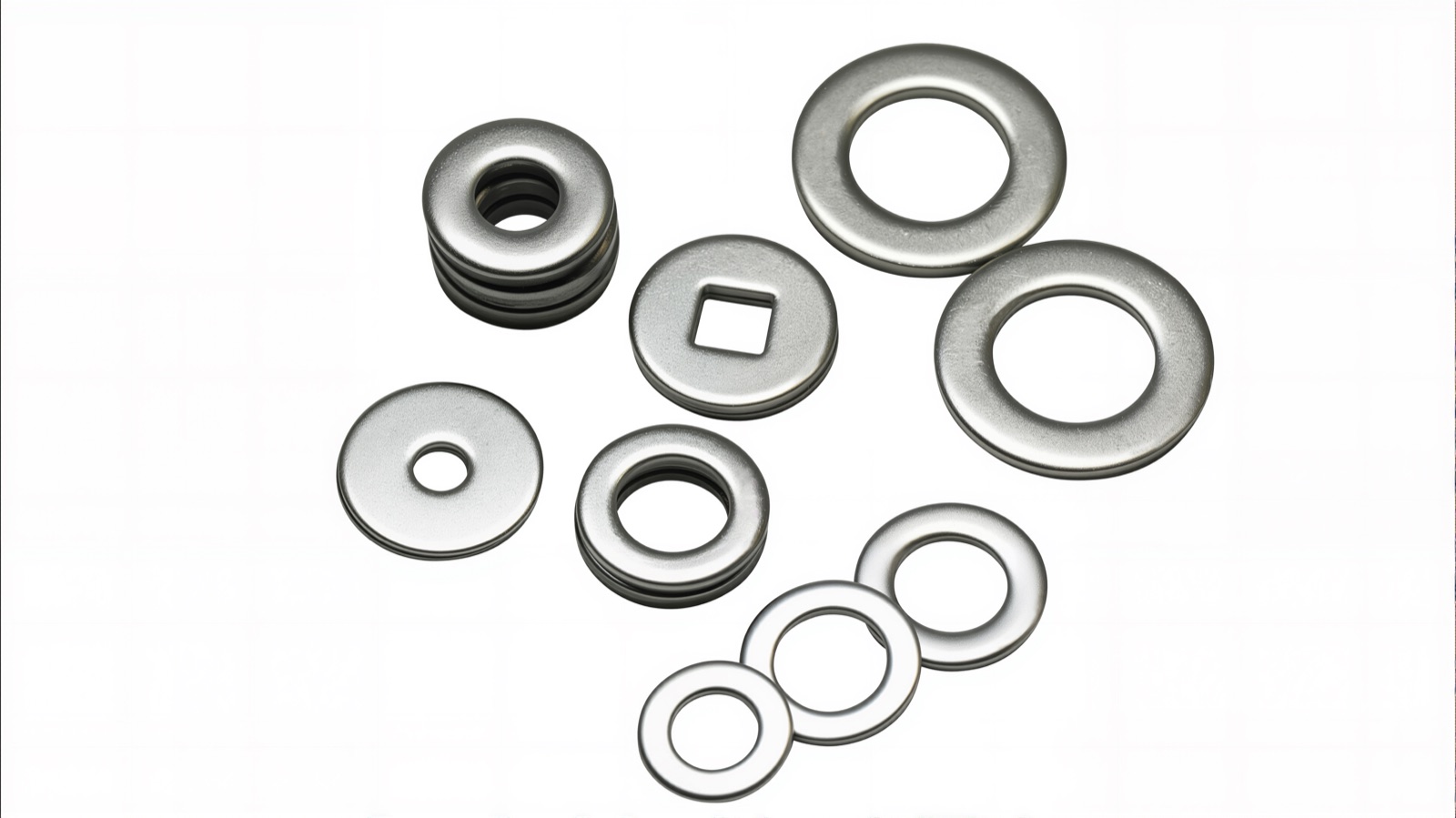
Salt spray, immersion and constant chloride attack.
Deck hardware, jetties, davits, rigging, boat-builders and offshore structures live in the most aggressive corrosion environment a washer will see. Standard 304 will surface-rust and pit here; molybdenum-bearing 316 / 316L is the baseline for the longest service life in splash and tidal zones.
Typical standards · DIN 125 · DIN 9021 (fender) · ASME B18.21.1
- Why stainless: 316/316L resists chloride-induced pitting and crevice corrosion far better than 304.
- Fender (DIN 9021) washers spread load on soft or oversized holes in hull and deck fittings.
- Mill test certificates (MTC / EN 10204 3.1) available on request for marine-grade traceability.
Acids, alkalis and process media on plant and piping.
Process plants, refineries, tank farms and dosing skids expose fasteners to aggressive media, washdown and elevated temperatures. 316 / 316L is the working grade; the low-carbon 316L is preferred where welding is nearby or where intergranular attack is a concern. Grade is matched to the specific media in play.
Typical standards · DIN 125 · DIN 433 · ASME B18.21.1
- Why stainless: molybdenum in 316 markedly improves resistance to sulphuric and other process acids.
- 316L (low carbon) minimizes carbide precipitation in welded or heat-affected assemblies.
- PMI and 3.1 material certificates available on request for compliance documentation.
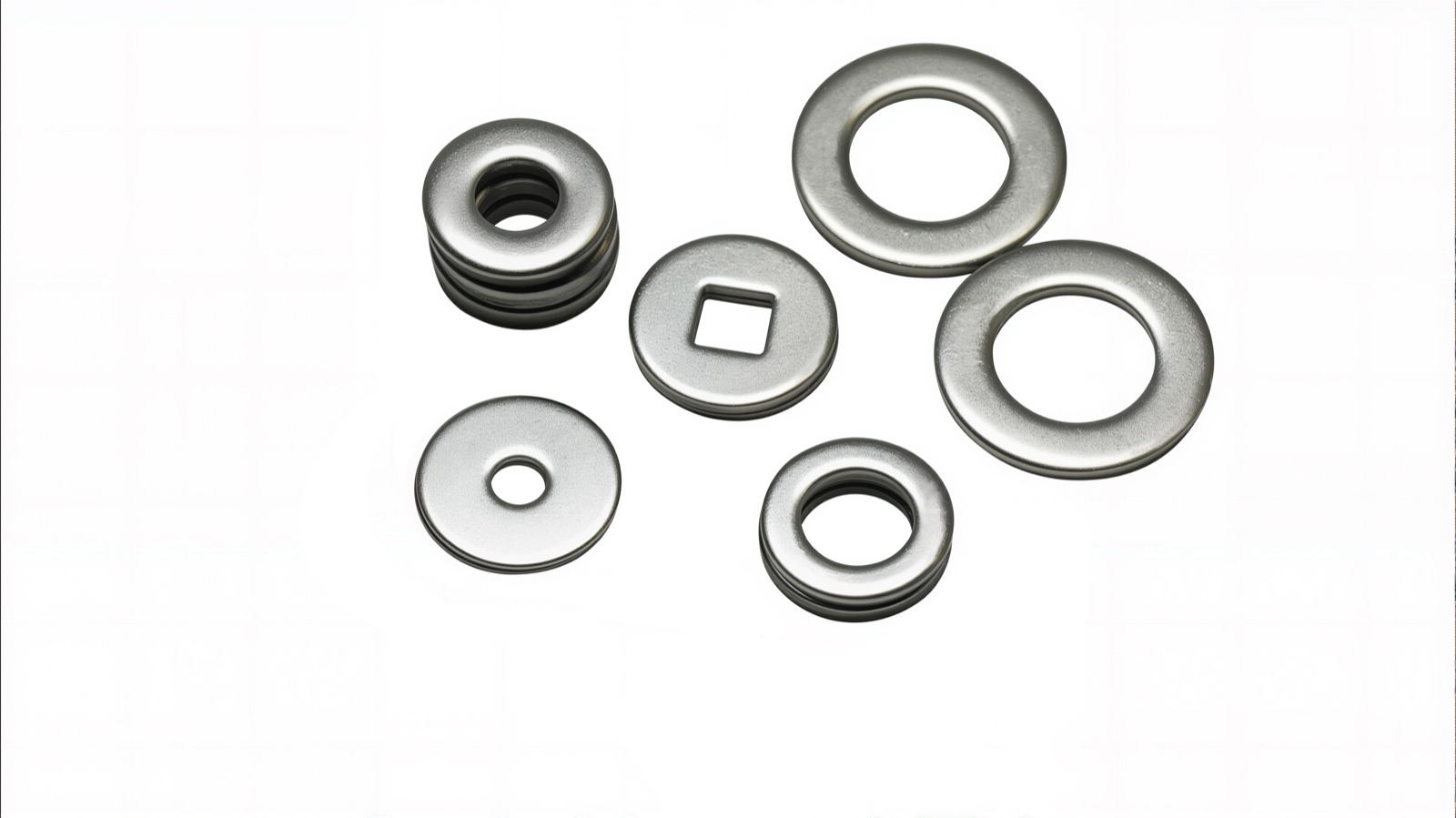
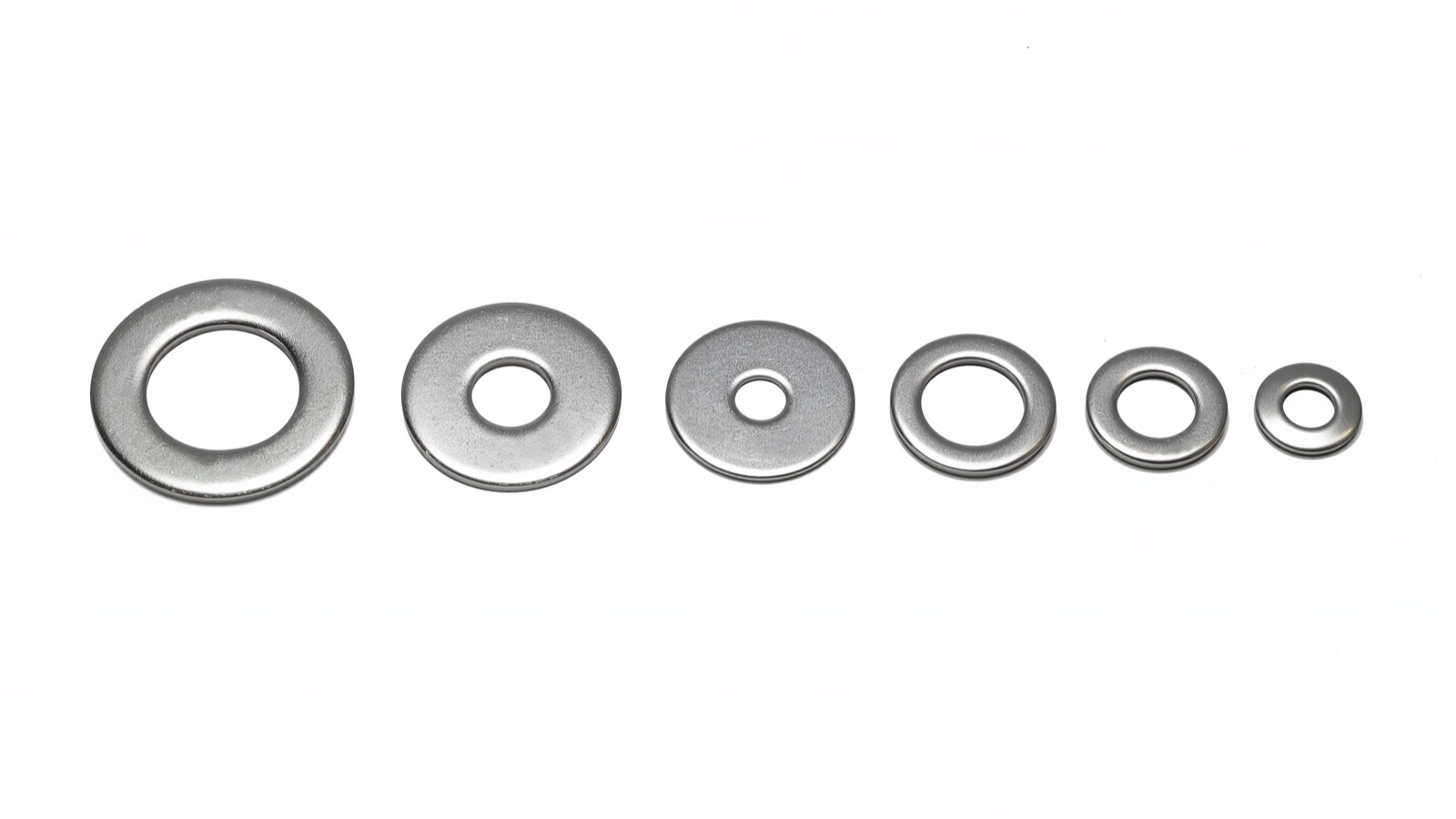
Outdoor renewables built to last decades unattended.
PV mounting rails, ground-mount and rooftop clamps, and wind-turbine ancillary hardware are installed once and expected to hold for 25 years or more with little maintenance. 304 is specified for most inland installations; coastal and high-humidity sites step up to 316 to defend against airborne chloride and condensation.
Typical standards · DIN 125 · DIN 9021 · DIN 127 (spring)
- Why stainless: no maintenance painting, no galvanic sacrifice — corrosion life matches the array.
- Spring (DIN 127) washers guard against loosening from thermal cycling and wind load.
- Coastal arrays: specify 316 to resist marine-aerosol chloride attack.
Vibration-rated joints under dynamic load.
Rolling stock, chassis, exhaust and body assemblies cycle through constant vibration and shock. Here the headline is not just corrosion but anti-loosening: spring and tooth-lock washers keep the joint tight under dynamic load. 304 covers most underbody and interior fastening, with 316 reserved for exhaust-adjacent or de-iced, salt-exposed positions.
Typical standards · DIN 127 (spring) · internal / external serrated · DIN 125
- Why stainless: resists road-salt corrosion that consumes plain-steel washers over a vehicle's life.
- Spring (DIN 127) and tooth-lock washers resist vibration-induced loosening on dynamic joints.
- External-tooth washers also provide reliable electrical bonding for grounding points.
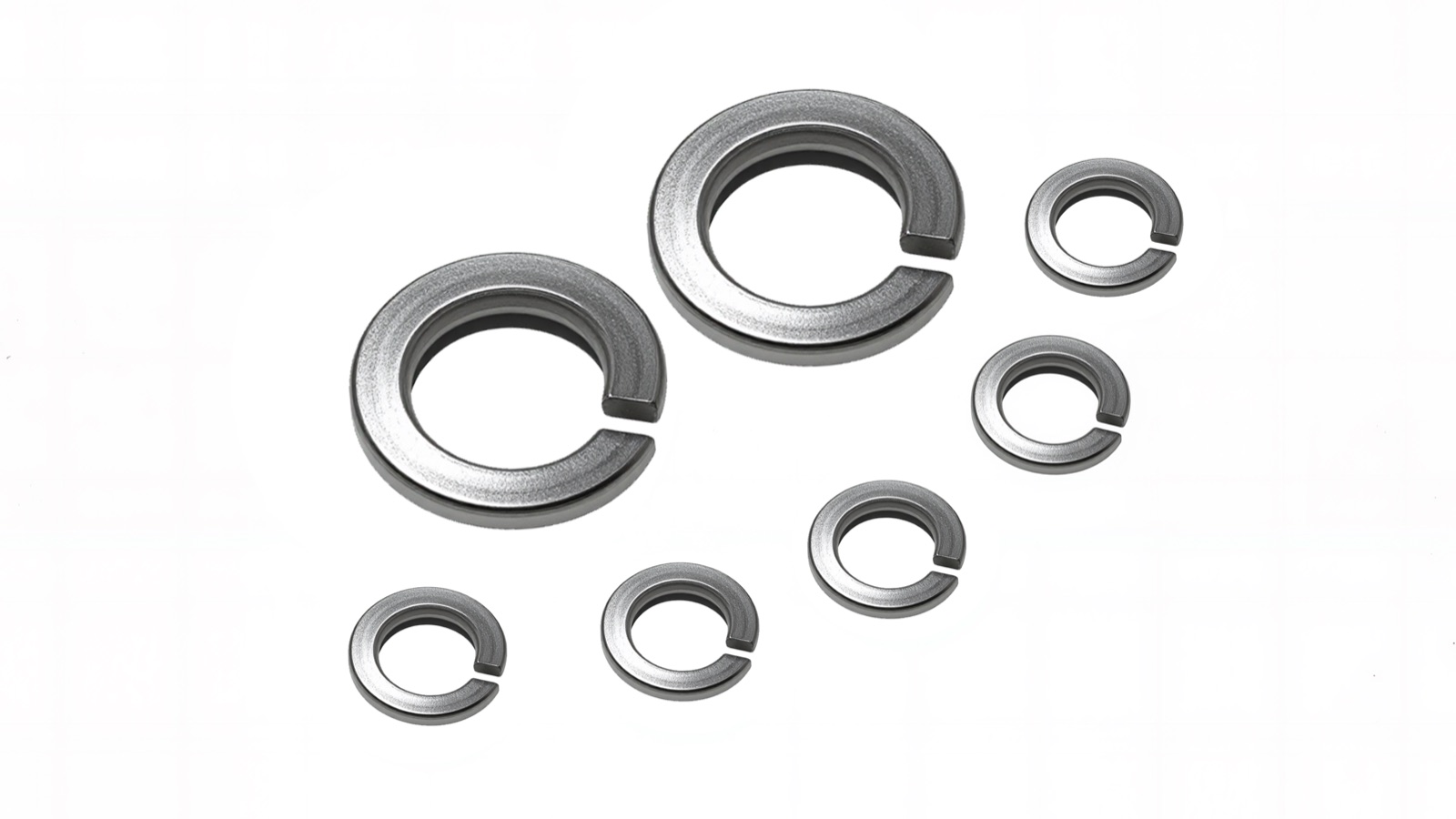

Cladding and structural fastening exposed to weather.
Curtain wall, rainscreen cladding, balustrades, canopies and structural steel connections sit in the open for the life of the building. 304 is the architectural default; 316 is specified for coastal buildings, swimming-pool environments, polluted urban air, or any visible fastener where staining cannot be tolerated. Square-hole and beveled washers handle channel and section-steel connections.
Typical standards · DIN 125 · DIN 9021 (fender) · square / beveled · ASME B18.21.1
- Why stainless: no maintenance repainting and no rust-staining of finished surfaces over the building life.
- Fender (DIN 9021) washers spread load over slotted holes and soft cladding panels.
- Square-hole and beveled washers seat correctly on channel, I-beam and section steel.
Wash-down, food-contact and cleanable surfaces.
Dairy, brewing, beverage, processing and packaging lines demand hygienic, cleanable fasteners that withstand caustic clean-in-place cycles and frequent washdown. 304 is suitable for most food-contact and general hygienic duty; 316 is preferred for high-salt, acidic or chloride-sanitizer environments. Smooth bright or polished finishes minimize bacterial harbourage.
Typical standards · DIN 125 · DIN 433 · ASME B18.21.1
- Why stainless: non-reactive, cleanable and corrosion-resistant under caustic and acidic CIP cycles.
- 316 for brines, chlorinated sanitizers and acidic products where 304 would pit.
- Bright or polished finishes reduce surface roughness and bacterial harbourage.
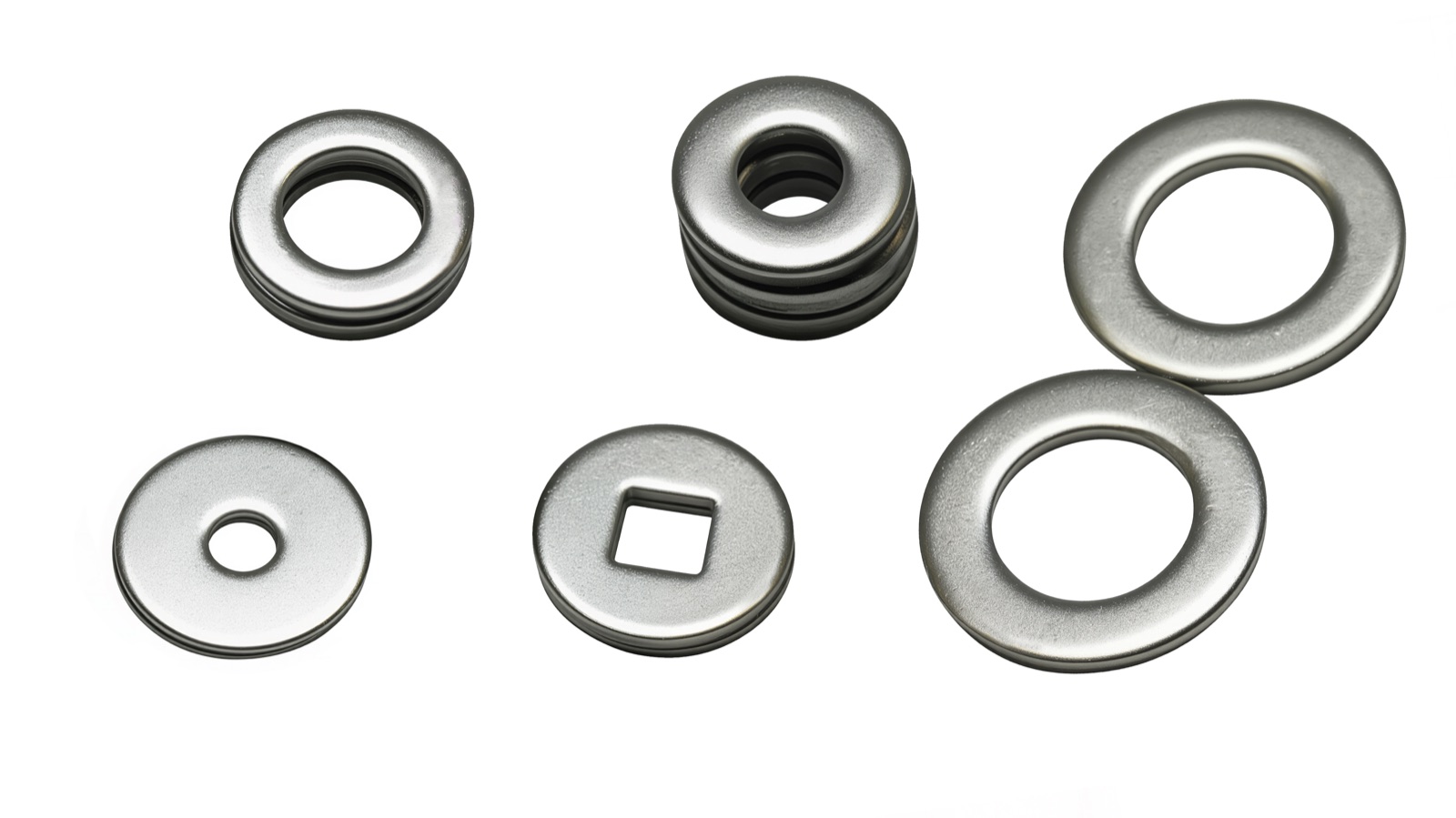
Industry, grade and washer type.
A quick reference for matching the right stainless grade and washer style to each environment. We confirm the final specification against your drawing and operating conditions.
| Industry | Recommended grade | Typical washer types | Typical standards |
|---|---|---|---|
| Marine & Offshore | 316 / 316L | Flat, fender | DIN 125 · DIN 9021 · ASME B18.21.1 |
| Chemical & Petrochemical | 316 / 316L | Flat, thin (DIN 433) | DIN 125 · DIN 433 · ASME B18.21.1 |
| Solar PV & Wind | 304 (inland) · 316 (coastal) | Flat, fender, spring | DIN 125 · DIN 9021 · DIN 127 |
| Automotive & Rail | 304 (316 salt-exposed) | Spring, tooth-lock, flat | DIN 127 · serrated · DIN 125 |
| Construction & Façade | 304 · 316 (coastal / visible) | Flat, fender, square-hole | DIN 125 · DIN 9021 · ASME B18.21.1 |
| Food, Beverage & Hygiene | 304 · 316 (brine / acid) | Flat, thin (DIN 433) | DIN 125 · DIN 433 · ASME B18.21.1 |
Tell us your application.
Describe the environment — the media, the load, the standard you build to — and we will recommend the grade, finish and standard that fit, then quote it. No account, no minimum to ask.
Tell us what you need.
Send specs or a drawing and we will come back with pricing, lead time and material options. No account, no minimum to ask.
- ✓ 304 / 316 / 316L, DIN & ASME or custom
- ✓ Replies from engineers, typically within one business day
- ✓ Samples and material certificates available