
DIN 433 Small-OD Flat Washers — 304 & 316 Stainless
DIN 433 is the small-outer-diameter flat washer — its OD is intentionally narrower than the equivalent DIN 125 washer, sized to seat under cheese-head, socket-head and cylindrical-head screws where a standard washer is too wide. We manufacture them at our Jiaxing factory in 304, 316 and 316L stainless steel, M2–M36 as standard. Every production run is traceable to documented stainless melts; MTC (EN 10204 3.1) and PMI are available on request.
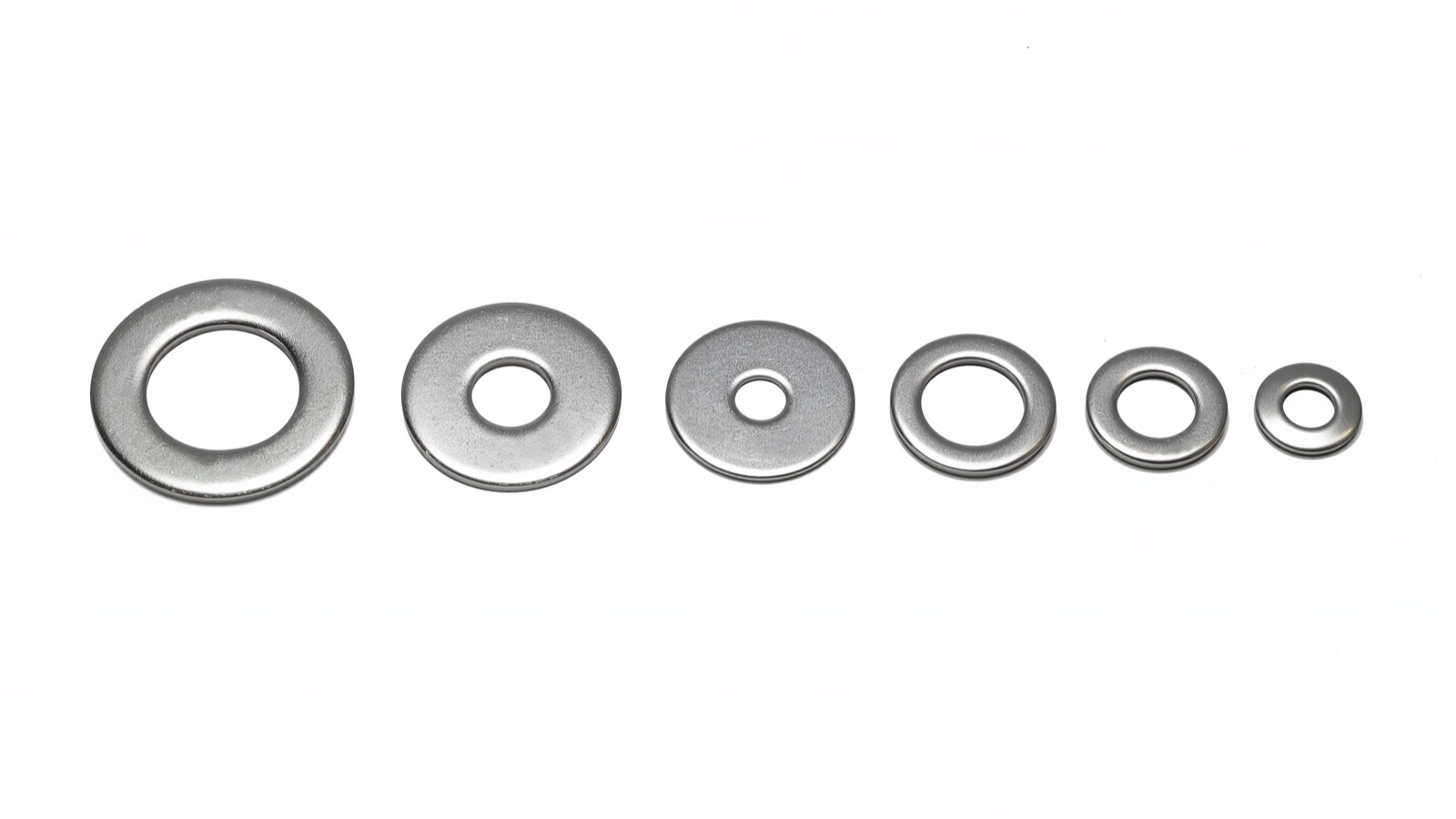
DIN 433 dimensions (nominal mm)
Nominal dimensions per DIN 433. All values in millimetres.
| Thread size | Inner Ø d1 (mm) | Outer Ø d2 (mm) | Thickness s (mm) |
|---|---|---|---|
| M2 | 2.2 | 4.5 | 0.3 |
| M2.5 | 2.7 | 5 | 0.5 |
| M3 | 3.2 | 6 | 0.5 |
| M3.5 | 3.7 | 7 | 0.5 |
| M4 | 4.3 | 8 | 0.5 |
| M5 | 5.3 | 9 | 1.0 |
| M6 | 6.4 | 11 | 1.6 |
| M8 | 8.4 | 15 | 1.6 |
| M10 | 10.5 | 18 | 1.6 |
| M12 | 13 | 20 | 2.0 |
| M14 | 15 | 24 | 2.5 |
| M16 | 17 | 28 | 2.5 |
| M18 | 19 | 30 | 2.5 |
| M20 | 21 | 34 | 3.0 |
| M24 | 25 | 39 | 4.0 |
| M30 | 31 | 50 | 4.0 |
| M36 | 37 | 58 | 5.0 |
Dimensions nominal (mm) per the standard; tolerances per standard. Larger sizes / inch on request.
Made to product grade A.
All HUIHUI DIN 433 washers are produced to DIN 433 / ISO 7092, product grade A — the standard precision grade. Dimensional tolerances follow the standard:
| Dimension | Tolerance direction | Example (M8) |
|---|---|---|
| Inner Ø d1 | plus only (0 / +) | 8.4 → 8.62 mm |
| Outer Ø d2 | minus only (0 / −) | 15 → 14.57 mm |
| Thickness s | symmetrical (±) | 1.6 mm (1.4–1.8) |
The full per-size minimum/maximum table to DIN 433 / ISO 7092, plus a dimensional inspection report to your AQL, are supplied with the order on request — together with the material certificate (MTC, EN 10204 3.1) and PMI. Tighter tolerances on specific features can be held on custom parts; send your drawing.
DIN 433 vs DIN 125 vs DIN 9021
Three flat-washer standards — three distinct OD families. The choice is driven by the screw head and seat geometry, not by personal preference.
DIN 433 — small OD
Outside diameter is smaller than DIN 125 for the same thread — matched to the bearing face of cheese-head (DIN 84), socket-head (DIN 912) and cylindrical-head screws. The correct part when the assembly has a counter-bore, recessed seat or tight lateral clearance that the DIN 125 OD cannot clear. This is the page you are on. See the flat washers overview for the full family.
DIN 125 — standard OD
Outside diameter roughly 2–2.5× the bolt — the default general-purpose metric flat washer for hex-bolt joints and most structural fastening. If your drawing does not specify a head type or seat constraint, DIN 125 is the correct washer. Dimensionally equivalent to ISO 7089. See our DIN 125 flat washers →
DIN 9021 — large OD (fender)
Outside diameter roughly 3× the bolt — significantly wider than both DIN 433 and DIN 125. Designed to spread clamping force across soft, slotted or oversized holes. Correct for thin sheet metal, plywood, rubber gaskets or any surface where a standard washer would pull through. See our fender washers →
Material: 304, 316 or 316L
Grade choice is set by the corrosion environment. Match the washer grade to the screw grade — mixing A2 and A4 in one joint is poor practice.
304 — the standard grade
18% chromium, 8% nickel. Excellent oxidation and general corrosion resistance. The right specification for indoor structural work, food-equipment assembly, precision machinery and most non-aggressive outdoor environments. Cost-effective and widely stocked. For socket-head cap screw assemblies in standard environments, 304 is typically the correct grade.
316 & 316L — for chloride exposure
Add 2–3% molybdenum and you get substantially better resistance to chloride pitting and crevice corrosion. Specify 316 for marine, coastal, chemical-process and de-icing environments. 316L (low-carbon) is the correct choice where welding is involved — the lower carbon content prevents sensitisation and intergranular attack in the heat-affected zone. In a DIN 433 assembly, if the screw is A4, the washer must be A4.
Bright (as-stamped mill finish) as standard — clean, consistent and practical for most industrial supply. Polished finish available on request for architectural, food-grade or visible-fastener applications. Finish is a surface detail; corrosion performance is determined by the grade.
How we make DIN 433 flat washers
Small-OD washers run tighter tolerances than standard — the bore-to-OD ratio leaves less room for die wear and feed drift. Three things keep them in spec at volume.
1. High-speed coil-fed pressing
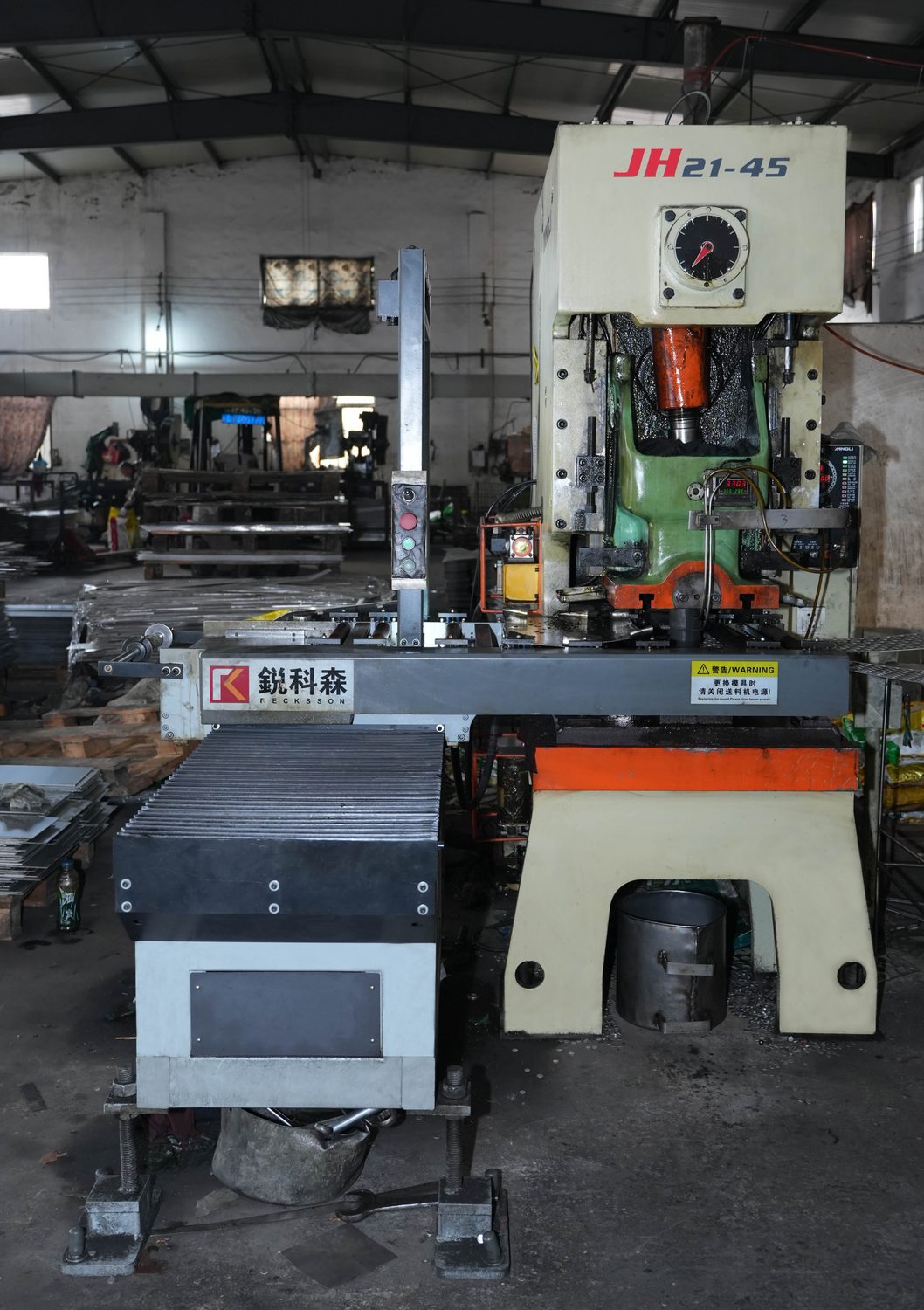
We run JH21-series power presses fitted with automatic coil feeders — stainless strip feeds straight off the reel into the die at a controlled rate. No manual blank loading means no operator-to-operator variation. Stroke rate and feed pitch are set once per die and held for the full run. For a DIN 433 M6 washer with an 11 mm OD and a 6.4 mm bore, that narrow annulus demands consistent feed and die alignment across every stroke — the automatic feeder delivers it.
2. Genuine full-spec stainless
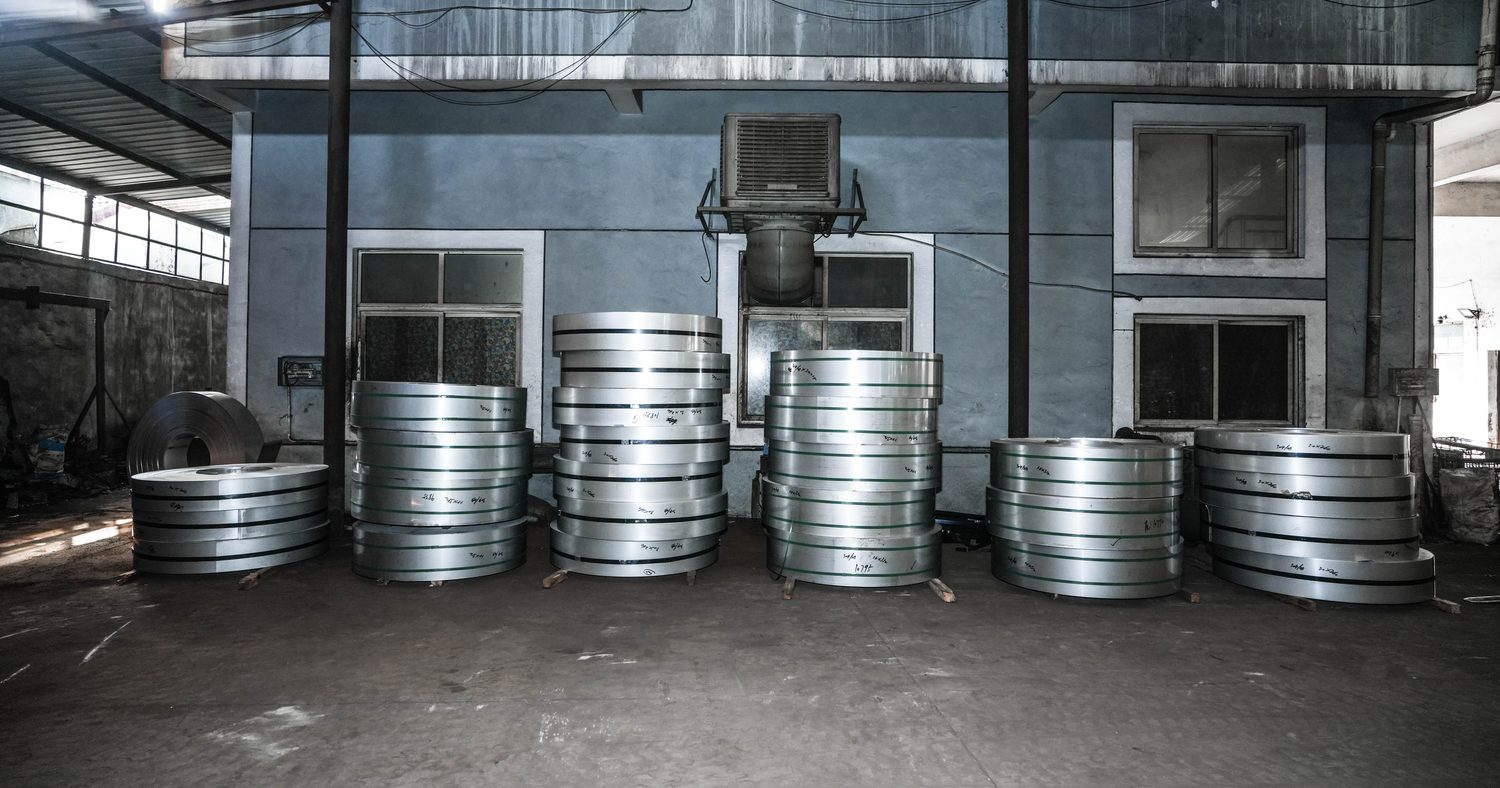
Material is sourced from documented stainless melts with traceable heat numbers. We stamp to the full nominal thickness specified in DIN 433 — not under-gauge strip to save cost. Recycled or mixed-grade material is not used. The MTC will show the heat number and chemical analysis; PMI by XRF can confirm grade on finished parts.
3. ISO 9001:2015 QC, MTC on request
Our quality management system is certified to ISO 9001:2015 (cert No. 74326Q00174R001). Inspection covers incoming coil verification, in-process dimensional checks at set intervals, and pre-shipment sampling. For export orders requiring compliance documentation:
- MTC (EN 10204 3.1) — mill test certificate tracing heat number, chemical composition and mechanical properties. Available on request at no extra charge for standard orders.
- PMI — positive material identification by XRF, confirming grade on finished parts. Available on request for critical or regulatory applications.
- First-article inspection — available for new tooling or non-standard sizes; dimensional report issued before bulk shipment.
Shipment terms FOB Ningbo or CIF to your port. HS code 7318.22.
DIN 433 questions, answered.
The specification questions engineers and procurement teams ask us most about DIN 433 small-OD flat washers. Have one we have not covered? Ask our team.
What is a DIN 433 washer and how does it differ from DIN 125?
DIN 433 is the small-outer-diameter flat washer standard. Its outside diameter is intentionally smaller than the equivalent DIN 125 washer — sized to sit under cheese-head, socket-head and cylindrical-head screws where the DIN 125 OD extends beyond the screw's bearing face or beyond the assembly feature. If a standard washer protrudes past a counter-bore, recessed seat or lateral clearance limit, DIN 433 is the correct replacement. Both share the same bore (d₁) clearance philosophy; DIN 433 simply constrains the outside diameter to match narrower head geometry.
Which screw head types is DIN 433 designed for?
DIN 433 is dimensioned to seat under cheese-head screws (DIN 84), socket-head cap screws (DIN 912 / ISO 4762) and cylindrical-head screws — fastener families whose bearing face is narrower than that of a hex bolt. The small OD is also correct in counter-bored holes, recessed seats and space-constrained assemblies where a DIN 125 washer cannot be accommodated without modifying surrounding geometry. For hex-bolt joints with no seat constraint, DIN 125 is the standard part.
Should I specify 304 or 316 for DIN 433 washers?
Match the washer grade to the screw grade — mixing A2 and A4 in one joint is poor practice and can accelerate galvanic attack. 304 (A2) covers general indoor, structural and most non-aggressive outdoor use. 316 or 316L (A4) is the correct specification for chloride, salt spray, marine or chemical-process environments. 316L is the low-carbon variant; specify it when the assembled joint will be welded. If you are unsure, read the full grade comparison or send us the application details.
What size range do you produce in DIN 433?
We produce the standard DIN 433 range from M2 through M36, covering all nominal sizes in the dimension table above. Larger sizes and inch equivalents are available on request. State the thread size, quantity and grade in your inquiry and we will confirm availability and pricing within one business day.
Do you provide MTC / PMI, and what are the shipping terms?
Yes. Mill test certificates (MTC, EN 10204 3.1) confirming heat number, chemistry and mechanical properties are available on request — standard for export orders. PMI by XRF can be arranged for compliance-critical shipments to confirm grade on finished parts. We ship FOB Ningbo or CIF to your named port; HS code 7318.22. MOQ and lead time are flexible and confirmed with your quote — no fixed minimum to ask. Send specs and quantities and we reply within one business day.
Tell us what you need.
Send specs or a drawing and we will come back with pricing, lead time and material options. No account, no minimum to ask.
- ✓ 304 / 316 / 316L, DIN 433 or custom
- ✓ Replies from engineers, typically within one business day
- ✓ MTC (EN 10204 3.1) and PMI available on request
- ✓ FOB Ningbo / CIF · HS 7318.22